

Kitchen
How to Clean a Glass Stovetop, and What to Keep Off It
A black glass cooktop shows every drip, every smear and every hurried wipe. Cool glass, a scraper, the right cleaner and a dry cloth do most of the work, in that order.
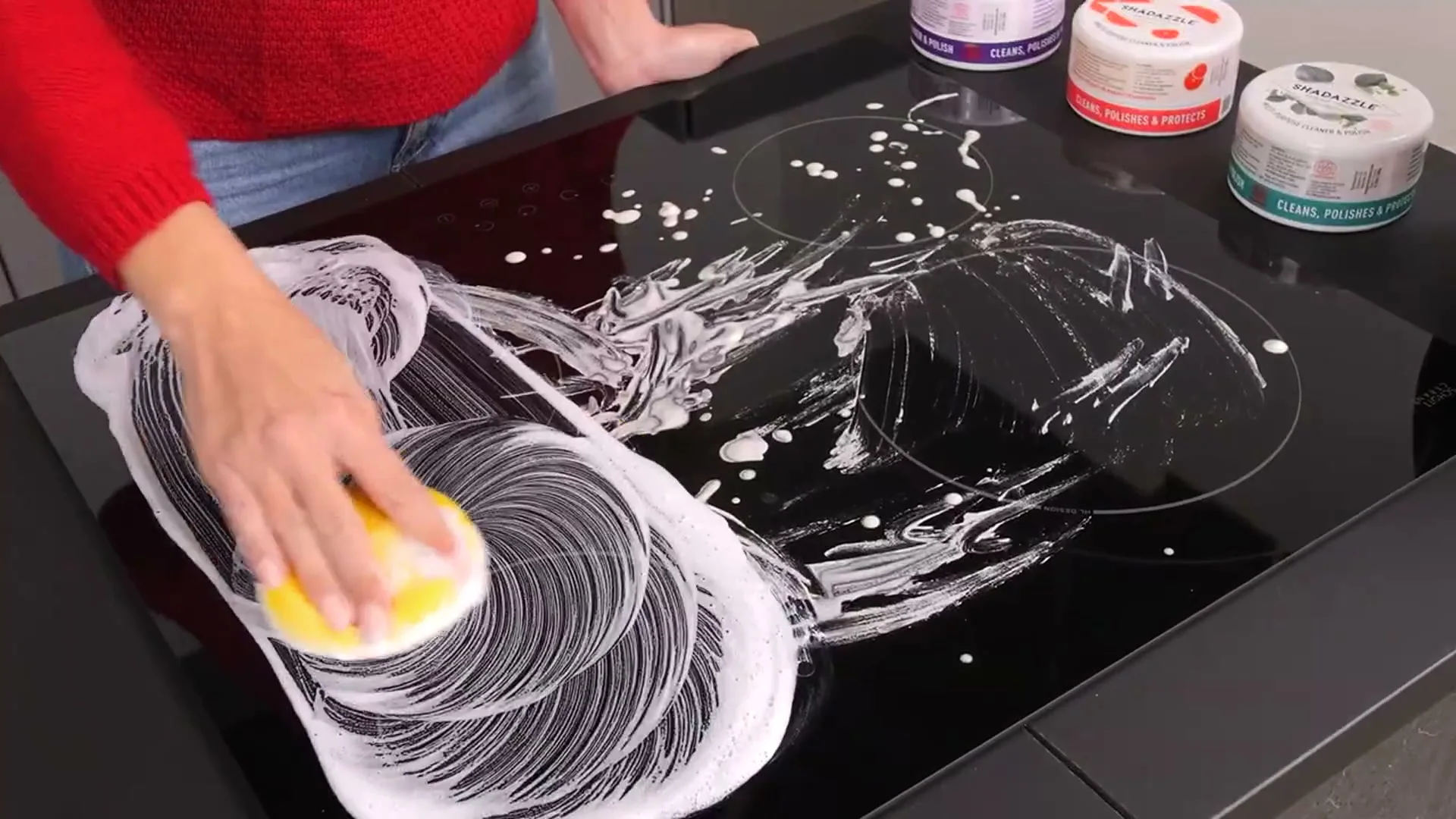
Start with cold glass and an empty top
Most marks on a glass cooktop come from the cooking itself: a pot that boiled over, a splash of oil from the pan, the pale ring a wet saucepan leaves when you lift it. SCHOTT, the company that makes CERAN glass-ceramic for cooktops, advises cleaning the surface after every use. The reason is easy to see on your own stove. A spill you wipe the same evening is a thin film. The same spill cooked on through a week of dinners turns into a crust, and a crust asks for more effort and harder tools.
For the everyday clean, wait until the zones are cold. A damp cloth on a hot zone sends steam up at your hand, and hot glass is no place for your fingers. The one exception is sugar, plastic and foil, which need the opposite treatment and get their own section below.
Clear the top before you start. Lift off the kettle, the spoon rest and the salt that lives by the back burner. SCHOTT asks you not to use the cooktop as a worktop at all, and gives a plain reason. Grains of sand carried in on a pot, a bag of vegetables or a shopping basket can scratch the glass when something slides across them. A top that holds nothing between meals is also faster to clean. You see every mark at a glance, and no drip hides under a jar until it has baked on.
Clean in good light, too. A black cooktop looks spotless under the hood lamp at night and shows every streak in the morning sun from the window. Bend down and look across the glass at a low angle before you call it done. Whatever is left on the surface catches the light from there, and you see it while the cloth is still in your hand.
Burnt sugar and melted plastic: scrape them at once
Sugar, plastic and foil are the three things SCHOTT treats as urgent. Jam boils over, a plastic spatula touches a hot zone, a scrap of foil sticks to the glass. In each case the maker's advice is to scrape it off straight away, while the surface is still hot, before it cools and sets. Switch the zone off first and keep your free hand away from the glass. The tool is a cooktop scraper, a flat metal blade in a holder, sold for this job.
The scraper is not only for emergencies. SCHOTT names it as the first tool for coarse dirt in general, so the old drips around the edge of a burner come off with it too, on cold glass. Push the blade under the crust in short strokes and lift the flakes away with a paper towel as you go. Keep that blade for the cooktop and nothing else.
Leave the sponge, the paste and the cloth in the drawer for this step. Rubbing melted sugar only drags it across more glass, and rubbing a hard crust with anything gritty is the very thing the glass makers warn against. Scrape first. Clean what is left afterwards.
The everyday clean: a few drops, a paper towel, a dry cloth
Once the scraper has done its part, SCHOTT's routine has two more steps. Put a few drops of a suitable cooktop cleaner on the glass and rub them over with a paper towel. Then wipe with a clean cloth and rub the glass dry. Look in your manual for the cleaner your cooktop maker names, or for the bottle that came in the box. SCHOTT points to cleaners certified for CERAN as the best choice, and says plainly that many ordinary detergents are not suited to the glass.
Notice the paper towel in that routine. The sponge by the sink has been through the dishes and the pans, and it carries grease and grit from both. Grit is exactly what the glass makers want kept away from the cooktop. A fresh paper towel goes on clean, does the job once and goes in the trash, so nothing from the sink travels to the stove.
The dry rub is the step most people skip, and it is the one you notice. Water left on black glass dries to spots and rings that look like dirt on a surface that is clean. A dry microfiber cloth handles that last pass. The University of Washington fact sheet on microfiber describes its split polyester and nylon fiber as holding several times its weight in liquid. That is the job of the cloth that follows the wet one. Our nanofiber cloths are about 11.8 inches square, come two to a pack, work with plain water and go in the washing machine afterwards.
The same maker lists what stays off the glass entirely: scouring pads, abrasive powders, and chemically aggressive cleaners such as oven sprays and stain removers. Keep the oven spray for the oven. And never mix cleaners on the glass to make a stronger one. The EPA asks you to use household products as the label directs and never to mix them unless the label tells you to. The federal Poison Help line gives the same advice in its prevention tips.
| What you see on the glass | What to reach for | What SCHOTT says |
|---|---|---|
| Burnt sugar, melted plastic, stuck foil | The cooktop scraper, at once, with the zone off | Scrape it off while the surface is hot, before it sets |
| Old crust around a burner | The scraper, on cold glass | A metal scraper for coarse dirt |
| Everyday spills and splashes | A few drops of cooktop cleaner on a paper towel | Clean after every use |
| Wet streaks after cleaning | A clean, dry cloth | Wipe with a clean cloth and rub dry |
| Scouring pads, abrasive powders | Keep them off the glass | Do not use scouring pads or abrasives |
| Oven spray, stain remover | Keep them off the glass | Avoid chemically aggressive cleaners |
Your cooktop manual comes first. Where it differs from this table, follow the manual.
Where a mild paste like ours fits, and where it does not
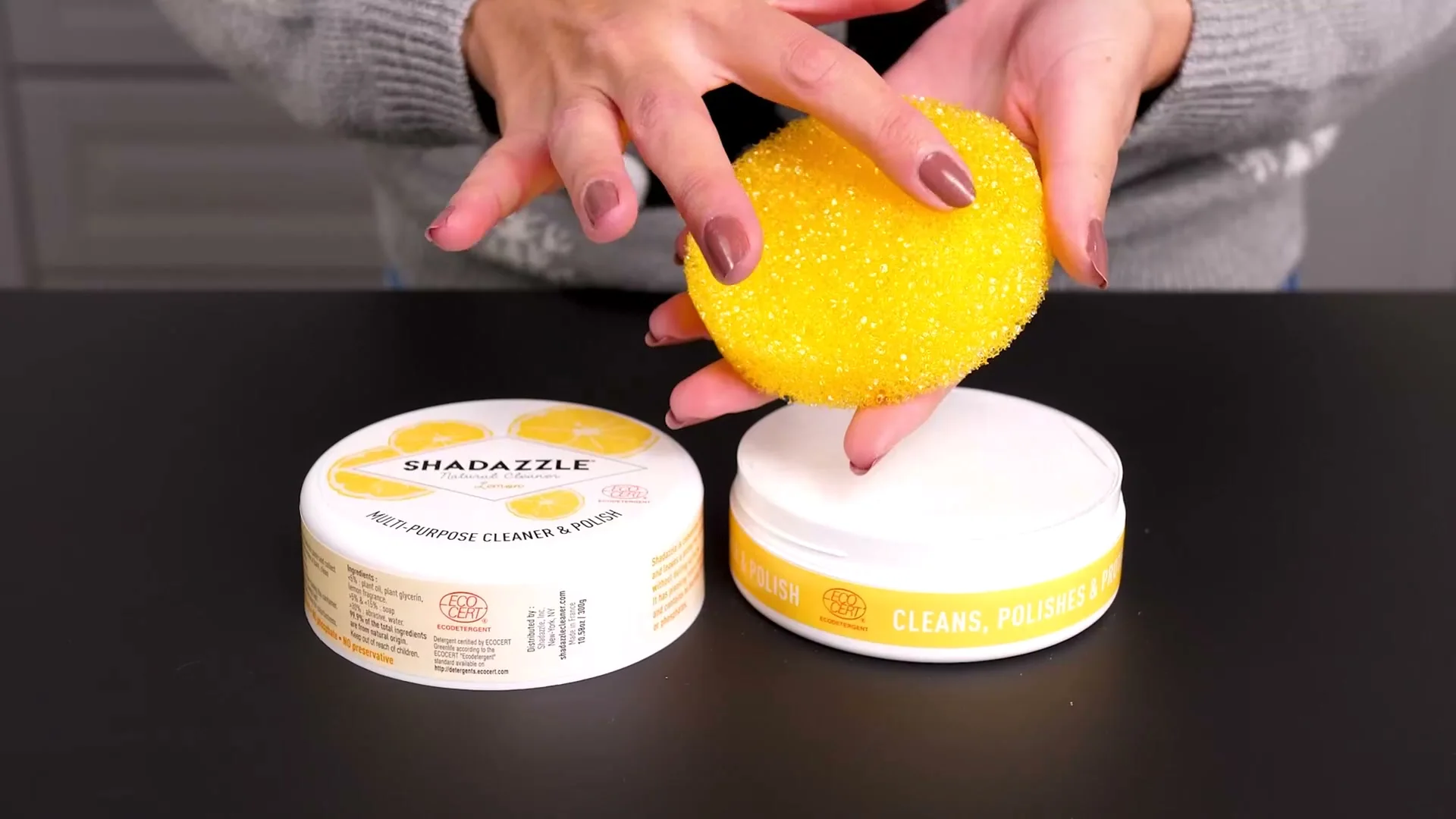
Glass stovetops are printed on the label of our Cleaner & Polish. It is a clay paste in a 10.58 ounce tub with a sponge, made in France, and the label lists four ingredients: clay, vegetable oil, vegetable glycerin and fragrance. Clay is a mild abrasive, and SCHOTT advises keeping abrasives off glass-ceramic. Those two facts pull in different directions, and the manual for your own cooktop decides which one applies to your glass.
So read the manual before the first try. If it asks only for the maker's cleaner and warns against any abrasive, follow it. Keep the tub for the steel sink, the outside of the pans and the chrome of the faucet. If your manual allows a mild cleaning paste, start small. Pick a corner away from the cooking zones. Wet the sponge, rub it on the paste until it foams, and use the paste sparingly. Work the foam over that corner with light pressure, take it off with a damp cloth, dry the glass, and look at it in daylight. If the corner looks as it did before, or clearer, move on to the dull patch you wanted to treat.
Use the paste for dull film and dried water marks, never for a crust, which belongs to the scraper. Then rinse thoroughly and wipe the glass dry. On a dark cooktop, foam left to dry shows as a gray or white haze, and that haze is paste, not damage. A second damp wipe and a dry one take it away.
If the test corner comes up dull or hazy after drying, stop there. Clean that cooktop the maker's way from then on, and give the tub other work in the kitchen. Your manual and your own corner decide this, not the label on our tub.
Marks that come from the pans, not the food
Some rings on the glass are not dirt at all. SCHOTT warns that pans with copper or aluminum bottoms can leave marks on glass-ceramic that are difficult or impossible to remove. If a ring the exact size of one pan keeps coming back after every clean, turn that pan over before you scrub harder. Scrubbing a mark that sits in the surface only adds the wear the maker warned you about.
The fix starts before the cooking. Lift pans on and off the zones rather than sliding them. The reason is the one behind the empty top: grit trapped under a sliding pan works on the glass the way grit under a sliding bag does. Keep the bases of your pans clean and dry, too, because burnt food on the bottom of a pan goes straight back onto the glass the next time it heats.
Stainless steel pans are on the paste label, so their outsides and bases are a fair place for the tub. Wash and rinse them well before they go back on the stove. Our stainless steel page covers sinks, pots and appliance fronts. Copper and aluminum are not on the label, and brass is listed as one to keep the paste off, so those pans need their own cleaner. If you are choosing new pans for a glass cooktop, read what the manual says about pan bases before you buy.
A routine for every evening
None of this takes long once it is a habit. The order matters more than the products, because each step clears the way for the next one and keeps the gritty work away from the glass. Most evenings the whole clean is the paper towel and the dry cloth. The scraper comes out when something has boiled over, and the paste, if your manual allows it, once in a while for the dull patches.
- Let the zones cool, unless sugar, plastic or foil is on the glass. Those come off with the scraper at once.
- Clear everything off the top.
- Scrape any crust from the cold glass with the cooktop scraper.
- Put a few drops of cooktop cleaner on the glass and rub them over with a paper towel.
- Wipe with a clean cloth and rub the glass dry.
- Now and then, and only if your manual allows a mild paste, work a little foam over dull patches with light pressure, then rinse and dry.
Keep the cooktop cleaner, the scraper and the cloth together in one drawer near the stove. Every cleaner stays in its own closed container, up and out of reach of children. A routine you can do with what is in one drawer is a routine you will keep.
For the whole range of surfaces our paste is made for, see where Shadazzle works, and for the full steps with the sponge, how to use Shadazzle. The glass stovetop page puts the paste and the cloths for this job side by side. The set pairs a Lemon tub, with its sponge, and two nanofiber cloths, which is everything the last two steps ask for.
